

If you've ever typed "epsom salt bath for eczema" into Google at some point during a flare-up, you're in good company. It's one of those remedies that keeps coming up - in mum groups, on natural health forums, in conversations with other parents who've tried everything.
But does it actually help? People have been soaking in epsom salts for centuries, and many families managing eczema swear by them. Whether the science fully backs that up is still being worked out - but what keeps drawing people back isn't mystery. It's that a warm bath is genuinely soothing, and that many families report real relief afterwards.
Here's what we know, what's still being researched, and how to get the most out of an epsom salt bath if you decide to try one.
What actually are epsom salts?
Epsom salt isn't a salt in the traditional sense. It's magnesium sulfate - a naturally occurring mineral compound first discovered in the waters of Epsom, Surrey, in England, in the early 1600s. People have been soaking in it ever since, for everything from sore muscles to skin conditions to stress.
The name stuck, the practice stuck, and centuries later it's still one of the most searched home remedies for sensitive and eczema-prone skin.
The magnesium connection
The reason epsom salts keep coming up in conversations about eczema is magnesium.
Magnesium plays a role in hundreds of processes in the body, including supporting skin barrier function and overall skin health. People with eczema often have a compromised skin barrier - skin that loses moisture too easily and reacts to things it shouldn't. So the idea that supporting magnesium levels could help makes intuitive sense.
Some studies suggest magnesium can be absorbed through the skin during a bath, and research published in the International Journal of Molecular Sciences found it may support the production of ceramides - the lipids that help hold your skin barrier together and keep moisture in. It's thought to support magnesium levels, but more research is needed before we can say that definitively.
What the science is clearer on is the role of relaxation. Stress is one of the most common triggers for eczema flares, and one thing that comes up consistently in the stories of people who use epsom salt baths is how relaxed they feel afterwards. For many families, that alone makes it worth trying.
Some research also suggests salt water may help reduce the bacterial load on skin - and the bacteria most commonly associated with eczema flares actually thrives in low-salt environments. So if epsom salt baths do help your eczema, it may be the salt component as much as the magnesium that deserves the credit.

How to use epsom salts for eczema-prone skin
Keep the water lukewarm
Hot water feels wonderful but strips the skin's natural oils and can trigger a flare. Lukewarm - slightly cooler than you'd naturally reach for - is the goal.
How much to add
Around 1-2 cups (roughly 300-500g) dissolved in a standard bath is the most commonly recommended amount. You don't need to go beyond this.
How long to soak
10 to 15 minutes. Keeping bath time short is consistently recommended for eczema-prone skin - soaking too long can dry skin out further.
The most important step: soak and seal
This is the step most people skip and it makes the biggest difference. The moment you get out, pat your skin gently with a soft towel - leave it slightly damp - and immediately apply your moisturiser or balm. The goal is to trap the moisture your skin just absorbed before it evaporates. Dermatologists call this "soak and seal" and it applies whether or not you add anything to the bath.
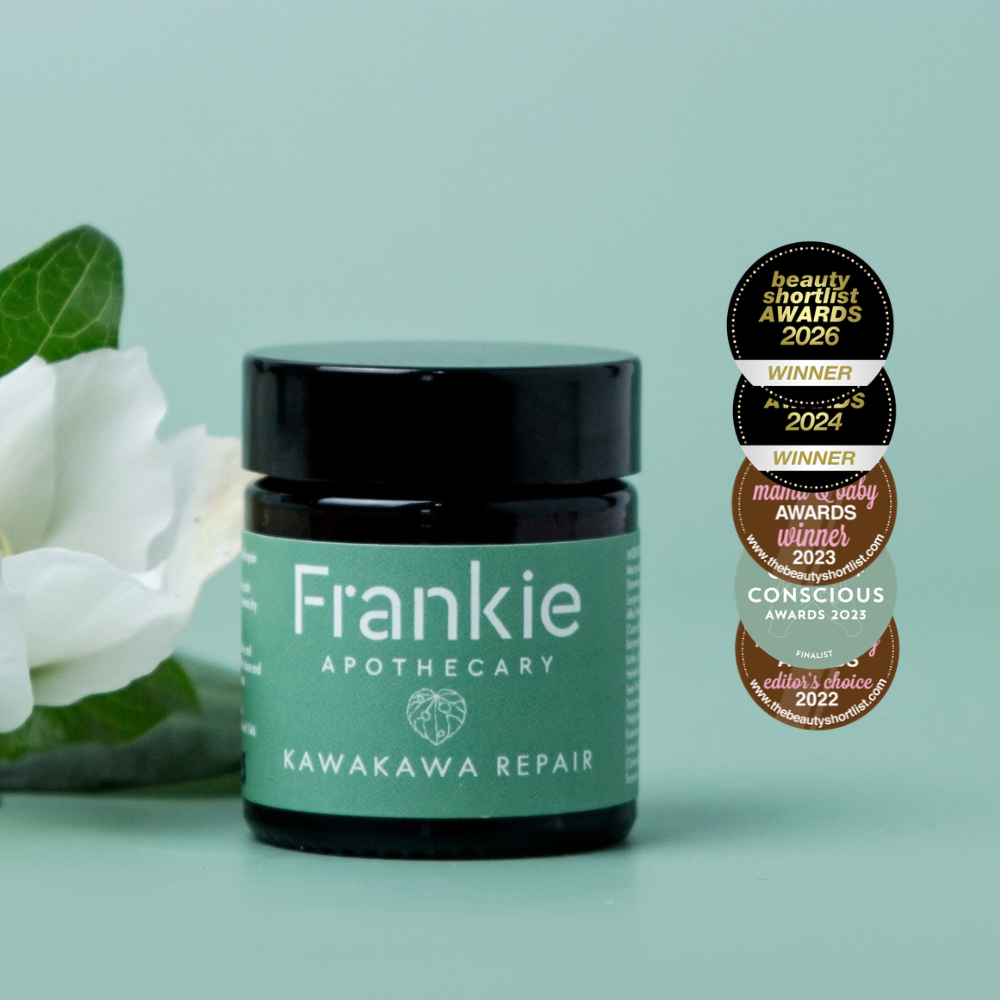
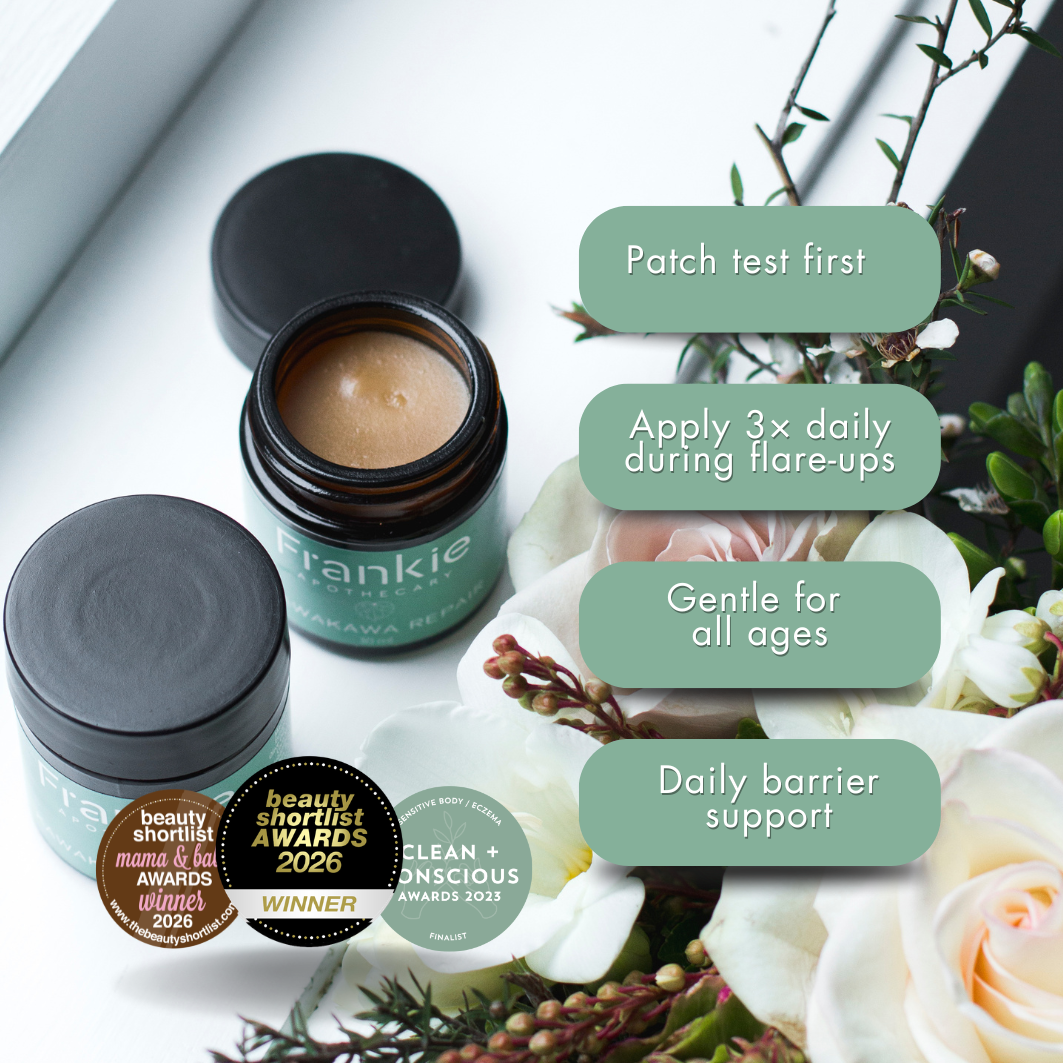
Our Kawakawa Balm is water-free and oil-based, making it ideal for this step - it forms a genuine barrier on the skin and locks in that post-bath hydration.
If your skin is broken or weeping
Skip the epsom salt bath. Salt water on cracked or broken skin will sting and may cause further irritation. Wait until the skin has settled before trying it.
For babies and young children
Lukewarm baths are a standard recommendation for children with eczema-prone skin. If you want to add epsom salts, start with half a cup and do a small patch test first. Every skin is different - some children find them soothing, others find them irritating. Always apply a balm immediately after.
How often?
Two to three times a week is a sensible starting point. Start conservatively and adjust based on how your skin responds - and always moisturise immediately after.
What about a colloidal oat bath?
If you want to try something with a stronger evidence base specifically for eczema-prone skin, a colloidal oatmeal bath is worth knowing about. Finely milled oat disperses in water to form a milky, skin-coating suspension that soothes and protects. It's gentle enough for babies from birth and widely recommended by dermatologists.
Our Soothing Oat Bath Soak is designed exactly for this. Some families use both - epsom salts some nights, the oat soak on others - always followed by the Kawakawa Balm while skin is still slightly damp.
Frequently asked questions
Do epsom salts help eczema?
For some people, yes - it seems to. The formal evidence specifically for eczema is limited, but warm baths are widely recommended for eczema-prone skin, magnesium plays a role in skin barrier health, and stress reduction is genuinely relevant for eczema management. Many families find epsom salt baths a useful part of their routine alongside their regular treatment. They won't replace medical advice, but they're low-risk and worth trying.
How much epsom salt should I add to a bath for eczema?
Around 1-2 cups (300-500g) dissolved in a standard bath of lukewarm water. Soak for no more than 15 minutes and apply a balm or moisturiser immediately when you get out while your skin is still slightly damp.
Can I use epsom salts in my baby's bath for eczema?
Lukewarm baths are generally recommended for babies with eczema-prone skin. If you want to add epsom salts, start with half a cup and do a patch test on a small area first. Always apply a balm immediately after bath time. Check with your GP or Plunket nurse if you're unsure.
Is epsom salt good for itchy skin?
Many people with itchy, dry or eczema-prone skin find epsom salt baths soothing. The relaxation effect of a warm bath helps, and some research suggests magnesium may support skin barrier function. The most important step is sealing in moisture immediately after with a good balm or moisturiser.
Where can I buy epsom salts in NZ?
Our Pure Natural Epsom Salts are available online at frankieapothecary.co.nz and ship across New Zealand and around the world.
How often should I take an epsom salt bath for eczema?
Two to three times a week is a sensible starting point. Daily epsom salt baths may be too drying for some people. Always moisturise immediately after with an oil-based balm or moisturiser.
Can I use epsom salts on weeping or cracked eczema?
No - skip the salt bath if your skin is broken, weeping or showing signs of infection. Wait until the skin has settled and check with your doctor if you're unsure.
What's the best bath soak for eczema-prone skin?
Both epsom salt baths and colloidal oatmeal baths are used by families managing eczema. Colloidal oatmeal has a stronger evidence base for soothing sensitive skin; epsom salts are valued for their relaxing effect and possible magnesium support. Many families use both depending on the night. The most important step with either is sealing in moisture immediately after with a good balm while skin is still slightly damp.
What should I apply after an epsom salt bath?
Apply an oil-based moisturiser or balm within a few minutes of getting out, while skin is still slightly damp. Oil-based products form a genuine barrier that locks in moisture. Our Kawakawa Balm works well for this step.
The bottom line
Epsom salt baths have been used for skin health for centuries. The science is still catching up, but the evidence for magnesium's role in skin health is genuinely interesting, and the benefits of a warm, relaxing bath for stress-triggered eczema are well established. Many families managing eczema find them a worthwhile part of their routine.
Keep the water lukewarm. Keep the soak short. And seal in that moisture the moment you get out.
This post is for general information only and isn't a substitute for medical advice. Always check with your GP or specialist for eczema treatment, particularly for young children.
Shop Pure Natural Epsom Salts
Shop Soothing Oat Bath Soak
Sources
- Gröber, U., Werner, T., Vormann, J., & Kisters, K. (2017). Myth or Reality - Transdermal Magnesium? Nutrients, 9(8), 813.
- Denda, M., & Katagiri, C. (2019). Magnesium ion promotes differentiation of epidermal keratinocytes. International Journal of Molecular Sciences.
- Proksch, E. et al. (2005). Bathing in a magnesium-rich Dead Sea salt solution improves skin barrier function. International Journal of Dermatology, 44(2), 151-157.
- National Eczema Association - Bathing and Moisturising. nationaleczema.org
American Academy of Dermatology - Psoriasis bathing guidance. aad.org
Thank you to Forté Foundry for the beautiful image on Unsplash